 Back to Blogs
How AI Trading Tools Actually Work — What to Look for Before You Pay
How do you evaluate an AI trading tool before paying?
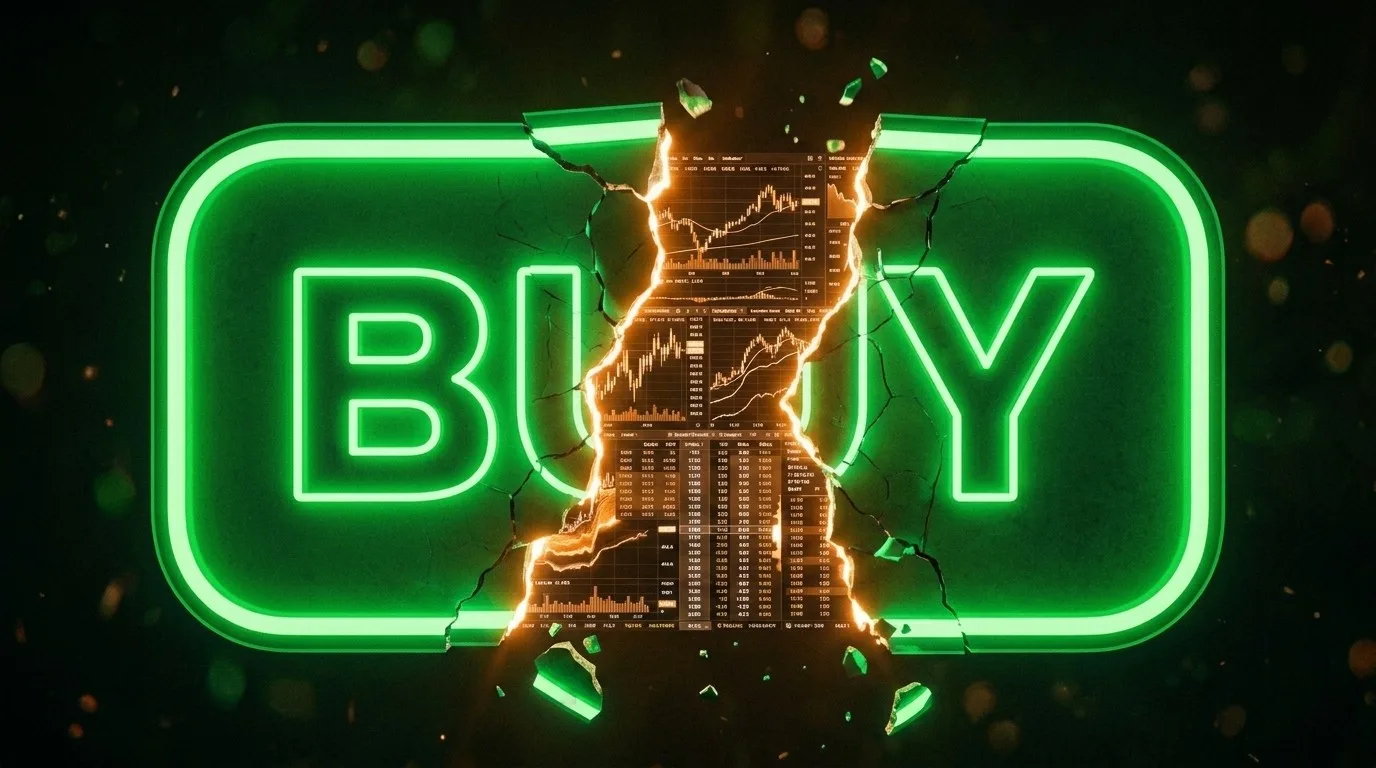
Most tools labeled "AI" are repackaged indicators — a moving average with a chatbot bolted on. The distinction worth checking is prediction vs synthesis. Prediction tools generate buy/sell signals; synthesis tools integrate independent data sources (price, order flow, options positioning, volume structure, multi-timeframe context) into one assessment without taking the decision from you. Five questions separate the two: what independent data does it pull from, does it show its reasoning, is it built for your market, what does it explicitly NOT do, and how does it surface conflicts?
You searched for an AI trading tool last month. You found dozens, and every one of them claimed "AI-powered insights" or "machine learning signals" somewhere on the landing page. You tried one, maybe two. The AI turned out to be a moving average crossover alert wrapped in a chatbot interface. Or a sentiment scraper that repeated what you'd already seen on Twitter. Or a pattern recognition engine with a claimed 87% accuracy that never showed up in your actual P&L.
The problem isn't that AI trading tools don't exist. The term has become so diluted that it covers everything from genuine multi-source synthesis to a glorified indicator with a text box bolted on. Here's how to tell the difference before you hand over a credit card.
Why Most AI Trading Tools Are Repackaged Indicators
The majority of tools marketed as AI trading platforms fall into one of two categories: prediction engines that generate buy/sell signals from historical pattern matching, or synthesis platforms that integrate multiple independent data sources into a unified view of current market conditions. The distinction determines whether the tool replaces your judgment or improves it.
Prediction tools are seductive because they remove the hardest part of trading: making the decision. A tool that says "buy here, sell there" appeals to the part of every trader that wants certainty. But financial markets aren't closed systems where pattern recognition reliably forecasts future price. A neural network trained on historical candlestick patterns is doing what a 2019 screener did, with more sophisticated math and better marketing copy.
SEBI's January 2023 study, Analysis of Profit and Loss of Individual Traders dealing in Equity F&O Segment, found that 89% of retail F&O participants incurred net losses during FY22, with aggregate losses exceeding ₹50,000 crore. A meaningful share of those losses came from traders following signals, whether from Telegram groups, indicator-based screeners, or tools generating buy and sell calls under an AI label. The signal was never the edge these traders believed it was.
Synthesis works differently. Instead of predicting what price will do next, a synthesis platform integrates data from multiple independent sources and presents a coherent picture of what's currently happening across those sources simultaneously. The trader still makes every decision. The tool handles the part that's genuinely beyond human capacity: holding multiple data dimensions in working memory at once, spotting when one contradicts another, and doing all of it under time pressure.
That isn't a skill gap traders can close with more screen time. George Miller's landmark 1956 paper in Psychological Review, "The Magical Number Seven, Plus or Minus Two," established that human working memory reliably holds roughly seven chunks of information. Real-time multi-source market analysis, where you need to track price dynamics, order flow, options positioning, volume structure, and timeframe alignment simultaneously, demands far more than seven chunks. The bottleneck is cognitive architecture, not effort or experience.
Five Questions That Expose What's Underneath the Marketing
The fastest way to evaluate any AI trading tool is to ask five specific questions most sales pages avoid answering: what independent data sources it integrates, whether it explains its reasoning, whether it handles your specific market's structure, what it explicitly can't do, and whether it surfaces conflicting signals or hides them.
What data sources does it pull from? A tool that analyzes price candles and generates signals is an indicator, regardless of whether the math underneath uses a neural network or a simple average. The input is the same; only the packaging changed.
Real synthesis requires genuinely independent data inputs. Price action is one dimension. Order flow, which tracks whether participants are aggressively buying or selling, is a separate dimension. Options positioning shows how large players are hedging. Volume profile reveals where the market accepted value and where it rejected it. Proprietary metrics like price velocity, which measures how fast a swing is covering ground relative to the current session, add layers that standard charting tools don't track at all. When a tool can't specify its data sources beyond "price and volume," it's running calculations on a single stream and calling the result AI.
Does it show its reasoning? Black-box signals are useless for trader development and dangerous for risk management. If you don't know why the tool flagged something, you can't evaluate whether the logic applies to your situation, and you can't learn from the outcome regardless of whether the trade works or fails.
Transparency doesn't mean raw calculations dumped on your screen. It means the output explains what it found across dimensions: velocity is elevated relative to the session, options flow is divergent from price direction, higher timeframe structure supports the thesis but order flow isn't confirming yet. That kind of reasoning lets the trader weigh evidence and decide, rather than follow instructions blindly.
Is it built for your market? This matters more than most traders realize, especially in India. NSE options chains operate on different mechanics from US options markets. Weekly expiry cycles, lot sizes, OI concentration patterns, and the specific dynamics of NIFTY and Bank Nifty don't translate from tools designed for SPY or QQQ. A platform trained on US market data and retrofitted with Indian instrument names will miss the structural differences that affect every F&O trade.
Similarly, crypto markets lack the centralized options infrastructure that makes gamma exposure analysis meaningful, and retail forex aggregators don't provide the order book transparency that order flow analysis requires. If a tool claims to analyze all markets using the same methodology, it's likely doing none of them at the depth that matters.
What does it NOT do? Every analysis platform has limitations. Specific markets it covers poorly, data feeds it can't access, conditions where its output becomes less reliable. A tool that claims comprehensive coverage of everything is either misrepresenting its capabilities or spreading itself so thin across each one that nothing it does is genuinely useful. The honest answer to "what don't you do?" reveals more about a platform's integrity than its feature page will.
How does it handle conflicting signals? Markets regularly produce situations where one data source says bullish and another says bearish. Price might be trending up while order flow quietly shifts to net selling. The options chain might show aggressive call buying while the volume profile places price at a low-volume node prone to sharp reversal. A tool that only shows confirmation of whatever direction price is heading tells you what you want to hear, not what you need to know. The conflict between data sources is often the single most valuable piece of information available in a given moment.
The Red Flags That Serious Traders Learn to Spot
The most reliable warning signs in AI trading tool marketing are accuracy claims above 80%, backtested performance without out-of-sample validation, buy/sell signals as the core value proposition, vague descriptions of underlying data sources, and demo screenshots showing exclusively winning trades. Each indicates a prediction tool dressed in synthesis language.
- Accuracy percentages. Any tool claiming 85% or 93% signal accuracy is almost certainly citing backtested results on data selected after the fact. Marcos López de Prado's 2018 research at Cornell, published in Advances in Financial Machine Learning, documented how backtesting systematically overfits to historical patterns that don't persist in live trading. The accuracy claim itself is the red flag, not the specific number. Serious platforms don't advertise win rates because they understand that in-sample performance and forward results are fundamentally different things.
- "AI-powered buy/sell signals." If the primary value proposition is telling you when to buy and sell, the tool is a signal generator in a modern wrapper. The product philosophy treats the trader as someone who needs instructions rather than someone who needs better information. Those are fundamentally different products with fundamentally different failure modes.
- Suspiciously clean screenshots. Demo images showing only perfectly timed entries and exits, with no losing trades visible, are marketing materials. Any tool used in live markets for more than a week has generated analysis that didn't play out. If the marketing doesn't acknowledge that, the rest of its claims deserve the same scrutiny.
- India-specific considerations. The wave of AI-integrated trading platforms in India has accelerated since 2024, with brokers adding chatbot interfaces and standalone apps promising AI-driven stock analysis. If a tool marketed to Indian traders can't explain how it handles NSE-specific data feeds, weekly expiry mechanics, or the unique OI dynamics of NIFTY and Bank Nifty, it's probably a US-centric product with a localisation layer on top. The 89% loss rate from SEBI's 2023 F&O study doesn't mean better tools are irrelevant, but tools that misrepresent their capabilities actively compound the structural problem rather than solving it.
What Multi-Source Synthesis Looks Like When It's Real
Genuine synthesis integrates price dynamics, order flow, options positioning, volume structure, and multi-timeframe context into a single coherent assessment of current market conditions. The output reads like a briefing from an analyst who has already processed every relevant data source, rather than a collection of independent panels the trader must reconcile under time pressure.
The five questions above aren't abstract evaluation criteria. They describe a specific kind of tool, and the difference between that tool and a repackaged indicator becomes concrete the moment you use one. Draconic, an AI trading intelligence platform, was built around this synthesis model. Rather than generating buy/sell signals, Draconic synthesizes across 176+ metrics spanning price dynamics, institutional flow, market depth, options positioning, and multi-timeframe structure. The output is a coherent assessment of what's happening, not a prediction of what will happen.
Here's what that looks like concretely. A trader considering a long position on NIFTY at 23,400 asks a single question instead of opening six panels. The response integrates velocity (is this pullback losing momentum or still accelerating?), CVD (are aggressive buyers stepping in at this level?), options positioning (where are the put and call walls relative to current price?), structural context (does an order block or fair value gap support this zone?), and higher timeframe alignment (does the 15-minute trend agree with what the 5-minute is showing?).
That single response replaces what would take three to five minutes of visual scanning across a charting platform, an options chain tab, a volume profile panel, and an order flow screen. The information isn't different. The cognitive architecture is.
The critical distinction: the trader still decides. Draconic doesn't say "buy NIFTY at 23,400." It says "here's what every dimension I can measure shows at this price level right now." Whether to enter, what size, where the stop goes, those decisions remain entirely the trader's. That isn't a compliance disclaimer. It's the product philosophy, and it's the clearest signal that separates synthesis from signal generation.
The Filter That Works Regardless of the Marketing
Every trading platform will claim AI capability by the end of 2026, and the marketing will get more polished. But the five questions in this article work regardless of how sophisticated the sales page becomes. Ask what data it integrates. Ask how it handles conflict. Ask what it can't do. The answers separate genuine synthesis from repackaged indicators.
The specific tools will change. New platforms will launch, existing ones will add features, and the AI label will keep stretching until it covers everything from a moving average alert to a multi-source intelligence system. The evaluation framework won't change, because the underlying distinction between prediction and synthesis is structural, not technological. A tool either integrates independent data sources and shows its reasoning, or it doesn't. No amount of marketing copy changes what's underneath.
More like this
September 9, 2026AI agents · Research
When an AI uses a tool, what happens to the evidence?
Abhinandan • 7 min read
July 4, 2026ai-trading
Chartink Alternative: Draconic vs Chartink
The Draconic Team • 6 min
July 4, 2026ai-trading
Sensibull Alternative: Draconic vs Sensibull
The Draconic Team • 6 min
May 12, 2026behind-the-price
Sector Rotation — The Macro Signal Most Traders Ignore
The Draconic Team • 3 min